
Platform: PlayStation 5

IO Interactive’s young-Bond origin trades Hitman’s sandboxes for something more linear and cinematic, and while I get it, I did miss the open-ended scheming. The opening sequence is a super satisfying and Patrick Gibson’s cocky not-yet-007 is great, but the pacing is very stop-start, forever pausing to hand control back to a cutscene. The set pieces are gloriously bombastic, but half the time the game seems to be playing itself. The most confident Bond game in decades, and great for what it is, I just wish it trusted me to drive it more.

ZA/UM’s follow-up to Disco Elysium is an espionage RPG built from the same mechanical bones: isometric, dialogue-heavy, sharp and surreally written. There are things to like here: the exert and ailment systems, and some dramatic encounters. The new setting of Portofiro is more populous than Revachol, but I suspect fewer of its faces will stay with me. Despite the name, it doesn’t fully commit to being a spy game; it’s Disco in a trenchcoat, and the shadow of everything that happened at ZA/UM never really lifts. The art and writing are legitimately good - from any other studio, unambiguously so - certainly Anton Vill’s artwork is extraordinary. Strip away the context and it’s an uncontroversially good game - I just can’t tell how much of the distance I feel is the game falling short, and how much is conflicted grief for what could have been.
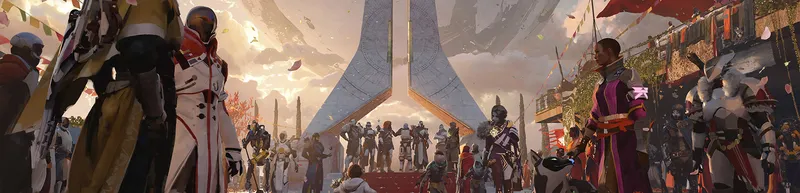
June 9’s update will be the last content Destiny 2 ever receives, with Bloomberg reporting significant layoffs to follow as Bungie winds down the development team - and reportedly, most of the studio found out at the same time as the rest of us. No Destiny 3 is in the works, no successor project has been greenlit, and two already-announced expansions have been cancelled. Resources are being redirected to Marathon, which hasn’t found its footing since launch. Destiny 2 has had a rough few years, so none of this lands as a shock - but it stings all the same… end of an era.
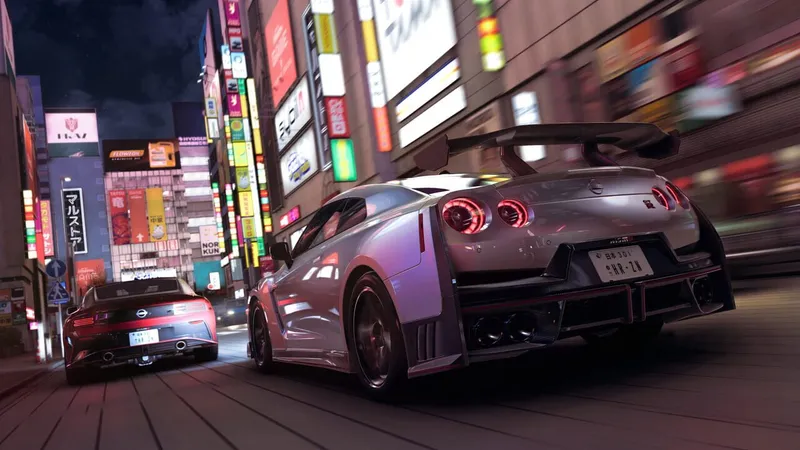
Japan is a great choice for Playground Games’ latest, and the open world they’ve built around it is genuinely stunning. For someone who bounces off racing games, Horizon has always been the exception: the driving model sits firmly in the “feels brilliant, not very realistic” zone, and that’s the whole appeal. FH6 delivers another enormous, content-stuffed festival, and if you can meet it on those terms, it’s an easy good time. The formula is undeniably wearing familiar grooves though, and critics who’ve lived with every entry likely feel it more than I do - but as a tourist, it’s a blast.

Poncle takes the Vampire Survivors build fantasy and drops it into a first-person dungeon-crawling deckbuilder, and… it works really well! The one-more-run pull is intact, the synergies get proper silly, and the genre shift adds genuine decision-making rather than removing it. Easy recommendation.
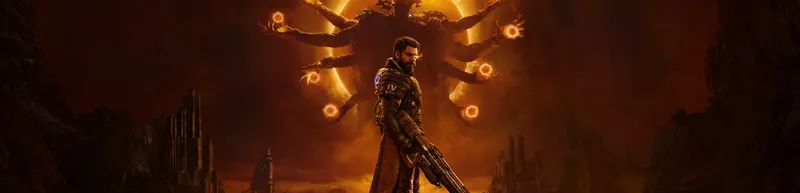
Housemarque’s follow-up to Returnal is immediately, comfortably familiar: the sound design hits within seconds, the controls are responsive, and the movement and gunplay feel just as good as you’d hope. The new world is genuinely cool, and the flexible difficulty system - no set modes, just a huge range of individual toggles - is a thoughtful idea for players who bounced off Returnal. Personally, I’d probably prefer to’ve played a game balanced around a fixed challenge - the freedom to self-adjust takes some of the edge off. Build diversity is theoretically strong, but I found something that worked, leaned into it, and the game didn’t really push back hard enough to make me reconsider. Admittedly this is more of a me-problem, and I enjoyed it to be sure, just wish it lasted longer!

Capcom’s long-awaited sci-fi action-adventure - announced in 2020, delayed indefinitely in 2023, finally here and better than expected. The primary draw is obviously the hacking-grid-while-in-combat mechanic: it sounds fiddly but works surprisingly well in practice, and the game layers in new ideas at a good clip. The dialogue is a bit on-the-nose and the story hits familiar beats, but it’s well-paced, short, and the collectables are genuinely fun to chase. After playing the demo I didn’t expect to get much more out of this, but really glad to’ve been proven wrong.

Pearl Abyss’s MMO roots are all over this - the progression systems, the menu clunk, the forgettable story - but what that DNA also buys is a staggering amount of content with genuine variety. The world is massive and beautiful, clearly built on a love of BOTW and RDR2, though the “immersive” interactions don’t always land and the movement, even post-patch, still isn’t where it needs to be. I also wish they’d just given us a character creator. There’s a lot to improve, but somehow it doesn’t matter a whole lot: the world has that rare, old-fashioned wanderlust that keeps you riding toward the next horizon just to see what’s there.
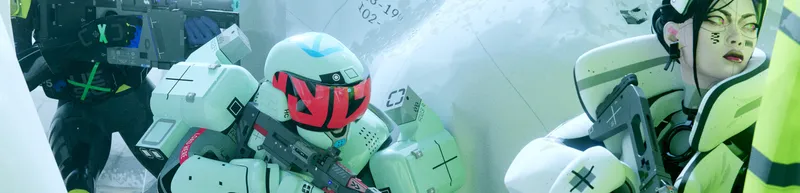
Where ARC Raiders carved out a comparative safe space for wholesome emergent moments, Marathon is relentlessly deadly - everything and everyone wants to kill you. It’s far from perfect, but the presentation is staggering; the art direction, typography, music, sound design and overall visual identity have an unbelievable amount of sauce, and I truly respect that Bungie swung for something genuinely different (stolen assets aside). A lot of people seem determined to see this fail (many of whom I suspect haven’t played it, or were never going to) and that’s a shame, because underneath the discourse is a game with real identity and real teeth. It won’t be for everyone, but I’m having a lot of fun.

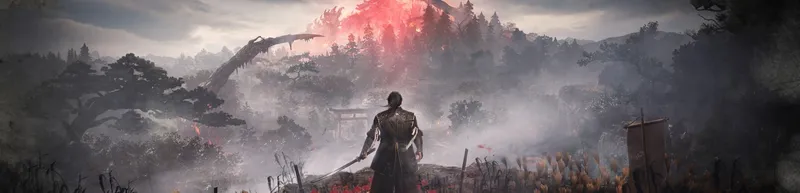
Team Ninja’s return to the franchise is a confident evolution. The dual Samurai and Ninja style system adds real depth to an already unbelievably satisfying combat engine, and the ‘open field’ structure works far better IMO. It is, by a wide margin, the easiest Nioh - which is a little disappointing - but the trade-off is a different kind of fun: less punishing, more expressive, and very hard to put down.