
Platform: PC (Microsoft Windows)

IO Interactive’s young-Bond origin trades Hitman’s sandboxes for something more linear and cinematic, and while I get it, I did miss the open-ended scheming. The opening sequence is a super satisfying and Patrick Gibson’s cocky not-yet-007 is great, but the pacing is very stop-start, forever pausing to hand control back to a cutscene. The set pieces are gloriously bombastic, but half the time the game seems to be playing itself. The most confident Bond game in decades, and great for what it is, I just wish it trusted me to drive it more.

ZA/UM’s follow-up to Disco Elysium is an espionage RPG built from the same mechanical bones: isometric, dialogue-heavy, sharp and surreally written. There are things to like here: the exert and ailment systems, and some dramatic encounters. The new setting of Portofiro is more populous than Revachol, but I suspect fewer of its faces will stay with me. Despite the name, it doesn’t fully commit to being a spy game; it’s Disco in a trenchcoat, and the shadow of everything that happened at ZA/UM never really lifts. The art and writing are legitimately good - from any other studio, unambiguously so - certainly Anton Vill’s artwork is extraordinary. Strip away the context and it’s an uncontroversially good game - I just can’t tell how much of the distance I feel is the game falling short, and how much is conflicted grief for what could have been.
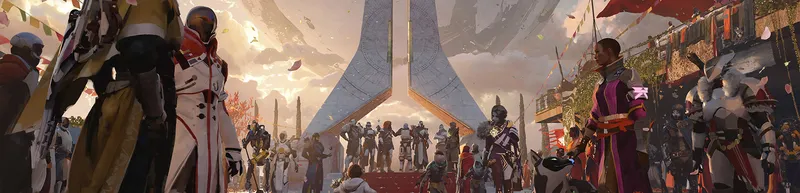
June 9’s update will be the last content Destiny 2 ever receives, with Bloomberg reporting significant layoffs to follow as Bungie winds down the development team - and reportedly, most of the studio found out at the same time as the rest of us. No Destiny 3 is in the works, no successor project has been greenlit, and two already-announced expansions have been cancelled. Resources are being redirected to Marathon, which hasn’t found its footing since launch. Destiny 2 has had a rough few years, so none of this lands as a shock - but it stings all the same… end of an era.

A pool roguelite where you fire balls at dice and layer on increasingly unhinged sticker combos: poop attracts flies, spiders spin webs to catch them, and so on. The number-go-up loop is immediately compelling and the interactions deliver genuine “wait, that works?” moments, even if the depth doesn’t go too deep. Cheerfully weird, stupid at times, always fun.

Japan is a great choice for Playground Games’ latest, and the open world they’ve built around it is genuinely stunning. For someone who bounces off racing games, Horizon has always been the exception: the driving model sits firmly in the “feels brilliant, not very realistic” zone, and that’s the whole appeal. FH6 delivers another enormous, content-stuffed festival, and if you can meet it on those terms, it’s an easy good time. The formula is undeniably wearing familiar grooves though, and critics who’ve lived with every entry likely feel it more than I do - but as a tourist, it’s a blast.

Surreal push-your-luck roguelite is greed distilled into a game loop. The trinket synergies give it roguelite texture beneath the gambling compulsion, and the lo-fi surrealist aesthetic earns its weirdness. Early access and lean on content, but the foundation is sharp. A promising little menace.

Poncle takes the Vampire Survivors build fantasy and drops it into a first-person dungeon-crawling deckbuilder, and… it works really well! The one-more-run pull is intact, the synergies get proper silly, and the genre shift adds genuine decision-making rather than removing it. Easy recommendation.

Odd Dreams Digital’s debut evolutionary roguelite has you starting as a blob and eating your way toward becoming, as everything inevitably does, a crab - and it’s more compelling than it sounds. The mutation system is expressive, runs are snappy, and the carcinisation mechanic is a smart bit of design wit. For ten bucks it’s a confident, charming game.

Capcom’s long-awaited sci-fi action-adventure - announced in 2020, delayed indefinitely in 2023, finally here and better than expected. The primary draw is obviously the hacking-grid-while-in-combat mechanic: it sounds fiddly but works surprisingly well in practice, and the game layers in new ideas at a good clip. The dialogue is a bit on-the-nose and the story hits familiar beats, but it’s well-paced, short, and the collectables are genuinely fun to chase. After playing the demo I didn’t expect to get much more out of this, but really glad to’ve been proven wrong.

Turn-based roguelike deckbuilder where you collect a band of mercenary pieces, combining traits and relics across a dark gothic medieval world. The art is fantastic, the world is intriguing and the design is elegant - approachable on the surface, genuinely demanding underneath - with solid variety across runs. So far, a strong early access foundation with clear room to grow.